Turning Spoiled Milk into 3D Printing Filaments: A Sustainable Innovation
3D printing technology faces a persistent challenge with its materials. Most 3D printing filaments are petroleum-based, non-biodegradable, and contribute to plastic waste that lasts far beyond their useful life. A novel breakthrough from the University of Wisconsin, Platteville offers an innovative solution by converting an agricultural waste product, spoiled milk, into a usable bio-composite filament for 3D printing.
The Concept Behind Milk-Based 3D Printing Materials
Milk contains proteins like casein and whey, which researchers have successfully extracted from spoiled or wasted dairy products. By processing and blending these proteins with existing polymers, they developed a printable material that acts as a plastic alternative. This approach repurposes dairy waste into a feedstock that works within current 3D printing workflows without requiring major modifications or new equipment.
Importantly, the output is a legitimate plastic substitute. This isn’t “printable cheese” but a bio-composite that exhibits acceptable strength and flexibility for printing applications while reducing reliance on petrochemical-derived plastics.
Addressing the Plastic and Food Waste Problem
The COVID-19 milk dumping crisis, where millions of gallons of milk were discarded due to decreased demand, was a pivotal motivator for this research. By turning what could be seen as an agricultural liability into valuable manufacturing input, the project embodies circular economy principles.
Within the broader 3D printing ecosystem, efforts to recycle plastics and develop biodegradable or compostable printing materials are underway. These initiatives include recycling failed prints, re-extruding plastic at home, and converting everyday waste like PET soda bottles into filament. The new milk protein-based material adds to this growing suite of sustainable alternatives, pushing the industry toward lower environmental impact.
Research Leadership and Scientific Rigor
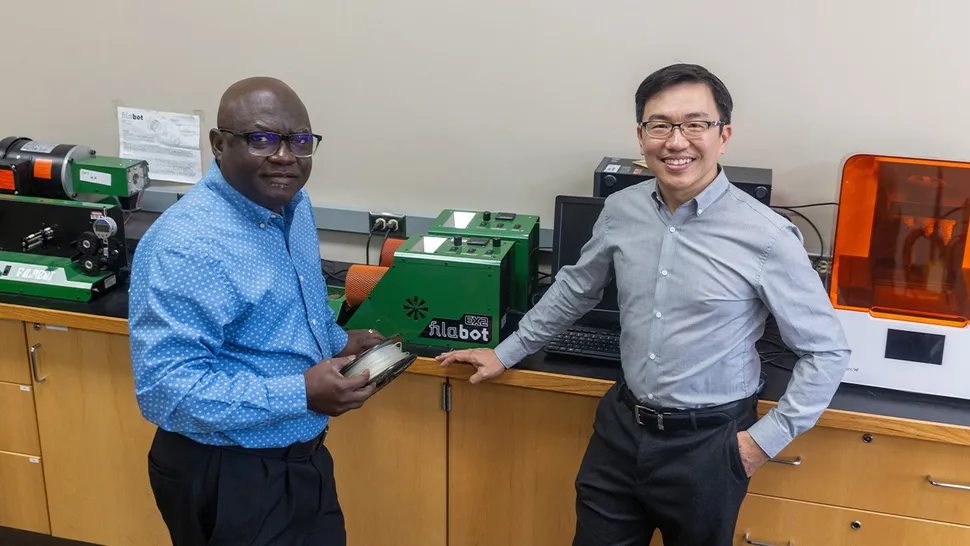
The project was spearheaded by Dr. John Obielodan, chair of Mechanical and Industrial Engineering at UW-Platteville, and Dr. Joseph Wu, Associate Professor of Chemistry. Their team meticulously optimized protein types, purity, and blend ratios over several years to ensure the bio-composite had the mechanical properties necessary for 3D printing without excessive printer fouling.
This was more than a simple experiment. It involved comprehensive materials science and engineering to create a viable product compatible with existing 3D printers.
Potential Impact and Future Prospects
If commercialized, this technology could significantly reduce the environmental footprint of additive manufacturing, diversify material supply chains, and provide new revenue opportunities for dairy farmers. It exemplifies sustainable innovation by reducing waste and fossil fuel dependency while enabling users to continue leveraging their existing 3D printer setups.
While not flashy, this material advancement is exactly the kind of practical progress needed for 3D printing to evolve beyond hobbyist use into mainstream manufacturing.
Conclusion
Transforming spoiled milk into 3D printing material is a promising step toward a more sustainable, circular approach in additive manufacturing. By creatively addressing both plastic pollution and food waste, this innovation could reshape how materials are sourced and used in 3D printing, paving the way for greener manufacturing solutions.