Researchers in Australia have matched 26 out of 28 printed PLA samples to their filament products, pointing toward a forensic technique that could help investigators connect seized 3D-printed firearms with filament recovered elsewhere.
The study, published October 22 in Forensic Science International, involved Dr. Georgina Sauzier and colleagues at Curtin University’s School of Molecular and Life Sciences, working with forensic experts from ChemCentre. As Tom’s Hardware reported, the team used thermal analysis to associate printed PLA with its filament brand and type.
The potential application is straightforward: a material match could help investigators establish connections between seized objects and filament, adding evidence to investigations into firearm manufacturing and distribution. The experiment remains an early step toward that application, with testing so far limited to small printed samples.
Heating PLA reveals clues to its filament product
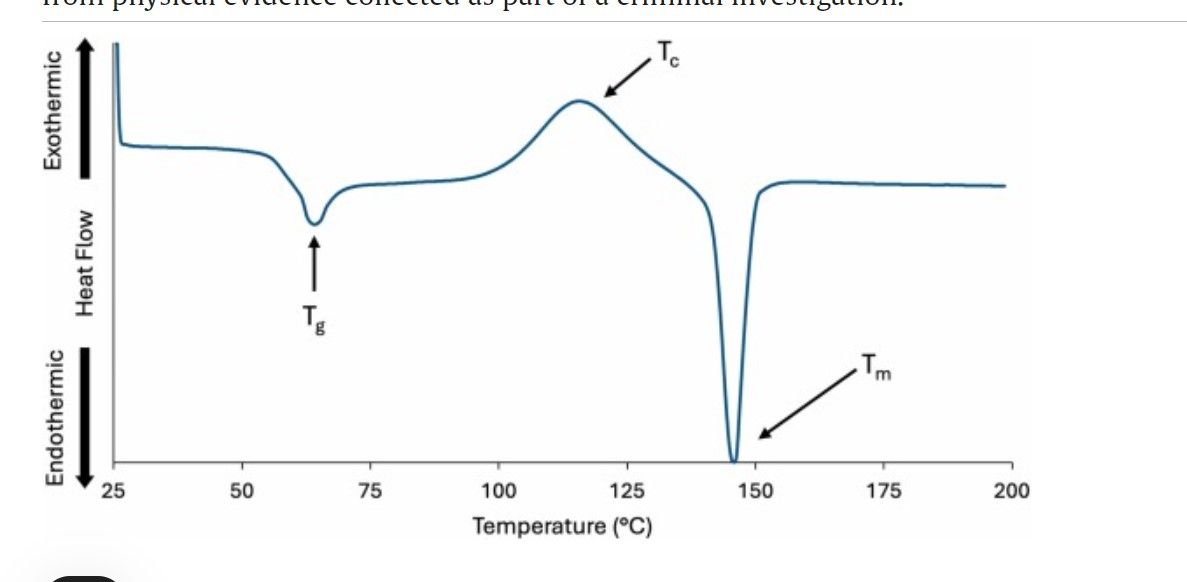
The technique relies on differential scanning calorimetry, or DSC. An instrument takes a sample through a range of temperatures and measures heat flow, producing a profile of its thermal behavior.
Printing changes a filament’s physical properties. By comparing the thermal behavior of a printed sample with unprinted filament, the researchers could identify associations between the two.
PLA’s semi-crystalline molecular structure makes it useful for this approach. As the material heats, crystalline structures break down and rearrange, producing temperature transitions that help distinguish products.
That gave the team enough information to correctly identify the filament product for 26 of the 28 PLA samples tested. The result concerns product-level identification: it offers a possible link to a filament brand and type, rather than an individual purchaser.
ABS and PETG proved harder to distinguish
The same thermal approach did not provide enough information to link the tested ABS and PETG samples to their respective filament products. Sauzier attributed that difficulty to their amorphous nature, which produced similar results without sufficiently clear identifiers.
The researchers also examined the materials using attenuated total reflectance Fourier transform infrared spectroscopy, or ATR-FTIR. This technique uses infrared light to investigate chemical bonds and material composition.
It revealed differences in additives within ABS and PETG, but those differences were still insufficient to associate the printed samples with their filament products.
Related work offers some context. In a September article by Sauzier and Curtin PhD candidate Michael Vic Adamos, the researchers described a separate study published in Forensic Chemistry that examined more than 60 filaments from the Australian retail market. Infrared profiles distinguished many of those filaments, including some made from the same base polymer, because of differences in minor ingredients and additives. Others could not be separated using that technique.
One printer and small tiles leave more testing ahead
The thermal study used a single printer to make small sample tiles. Those tiles were cut with scissors and stored for a year under monitored office conditions before testing.
That leaves important practical questions for broader validation. Different printers may affect a material’s physical properties, while the geometry of a printed object can change how quickly different areas cool. Overhangs and infill can experience different combinations of cooling and print speed, potentially influencing the thermal profile measured later.
The next challenge is to establish how reliably the method works across those printing conditions and a wider range of materials. In their September account, Sauzier and Adamos also described ongoing work with complementary analytical techniques, including examining the elements present in filaments. Combining those measurements could give investigators a fuller chemical profile when comparing a seized printed object with possible filament sources.