Nikon Advanced Manufacturing has secured a US Department of War contract to develop and deliver multiple metal 3D printers with a two-meter build height, targeting mid-body production for the Tomahawk Land Attack Missile.
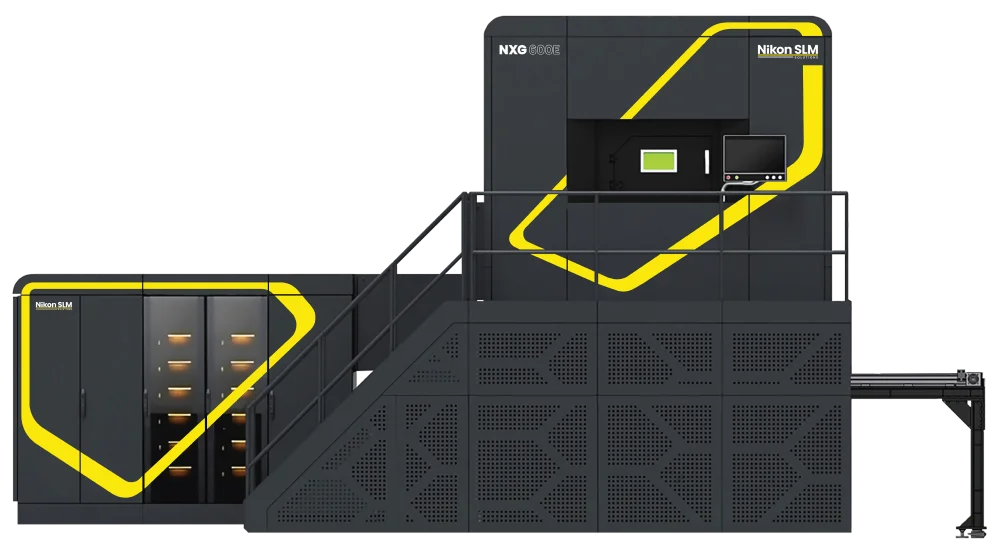
Announced on October 22, 2026, the award funds customized Nikon SLM Solutions laser powder bed fusion systems based on the company’s large-format NXG-E platform. The machines will also support other potential applications with similar requirements.
The contract puts federal funding directly behind the development of manufacturing capacity for missile structures, extending Nikon’s growing presence across the US defense supply chain.
Two-meter systems will run at Long Beach
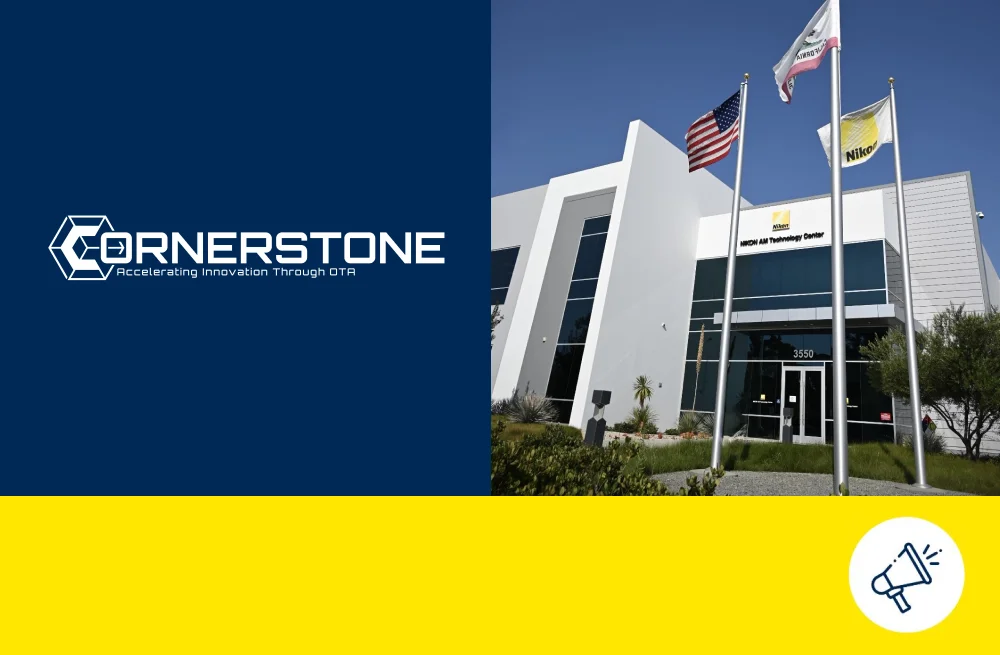
The program will operate at Nikon AM’s Technology Center in Long Beach, California, where the systems will support prototyping and the expansion of critical production capacity. Nikon describes the award as foundational funding for developing and delivering multiple units.
The contract was awarded through the Cornerstone Other Transaction Authority, a mechanism the Department of War uses to fund strategic defense industrial base and supply chain projects quickly. It falls under the department’s Industrial Base Analysis and Sustainment program.
Long Beach already combines metal additive manufacturing equipment with engineering, production, laboratory and qualification capabilities. Nikon says the site operates under stringent, ultra-secure manufacturing requirements for aerospace and defense work.
The 90,000-square-foot Technology Center opened in July 2024, with both Nikon SLM Solutions powder bed fusion and Nikon directed energy deposition equipment. Its capabilities also include metallurgy, metrology and design for additive manufacturing, giving the missile program access to more than machine capacity alone.
Nikon targets tactical munitions production bottlenecks
Nikon frames the award as part of a broader US effort to accelerate tactical munitions production. The company says metal additive manufacturing can reduce bottlenecks, increase domestic capacity and support more scalable, resilient defense supply chains.
“We are proud to leverage our company’s esteemed history of innovation and ability to scale to provide advanced manufacturing technology to expand production capacity of TLAM and other critical systems with speed.”
Hamid Zarringhalam, GM and CEO, Nikon Advanced Manufacturing
The immediate work centers on missile mid-bodies and the equipment needed to manufacture them. Funding covers both system development and delivery, tying the customized two-meter machines to a defined production application.
Large-format Nikon machines expand across defense manufacturing
The Tomahawk program follows other investments in Nikon’s large-format equipment. In February 2026, HII’s Newport News Shipbuilding division ordered a second NXG 600E, building on its earlier acquisition for US Navy shipbuilding. That collaboration also includes process development for nickel aluminium bronze components.
Lockheed Martin has added large-format Nikon SLM Solutions systems at its Missiles and Fire Control site in Grand Prairie, Texas. Elsewhere, Beehive Industries placed a self-funded, multi-unit NXG 600E order, while Sintavia’s $25 million expansion included a second NXG XII 600 to support Department of Defense programs through 2030.
Missile structures are also attracting additive manufacturing investment beyond this contract. Lockheed Martin is 3D printing the guidance section and fins for its Mako hypersonic missile. The company says the guidance section takes one-tenth the production time and one-tenth the cost of conventional manufacturing.
Meanwhile, ASTRO America’s $9 million DART initiative is applying powder bed fusion and other processes to the Gray Wolf missile, aiming to reduce the cost of manufacturing and qualifying missile bodies and components. Nikon’s Long Beach program adds a directly funded equipment-development effort to that wider push.