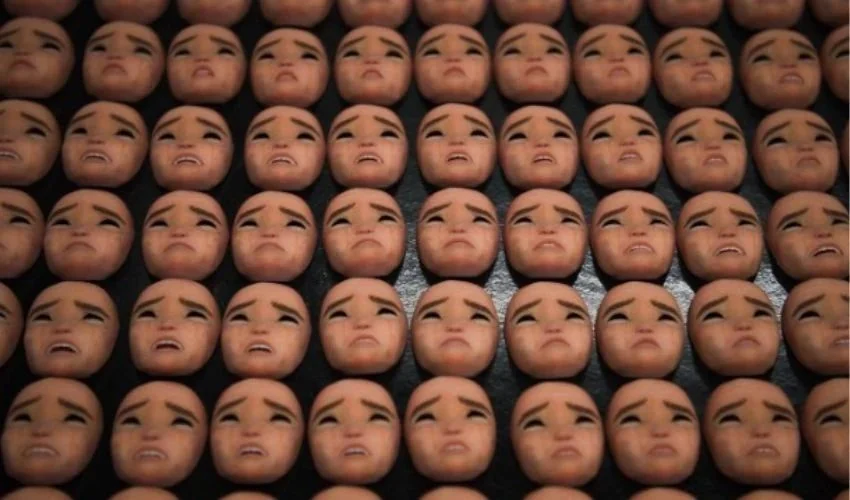
LAIKA made more than 142,000 custom 3D printed facial expressions for Wildwood, turning digital facial performances into physical parts that animators could swap between frames. Behind that volume was a demanding production requirement: each expression had to change while skin tones and surface details stayed consistent.
The Oregon studio, known for Coraline, paired Fraunhofer IGD’s Cuttlefish software with Stratasys J750 and J850 PolyJet printers. Wildwood opened in US theaters on October 23, bringing the results of that workflow to the big screen.
A different face for each moment
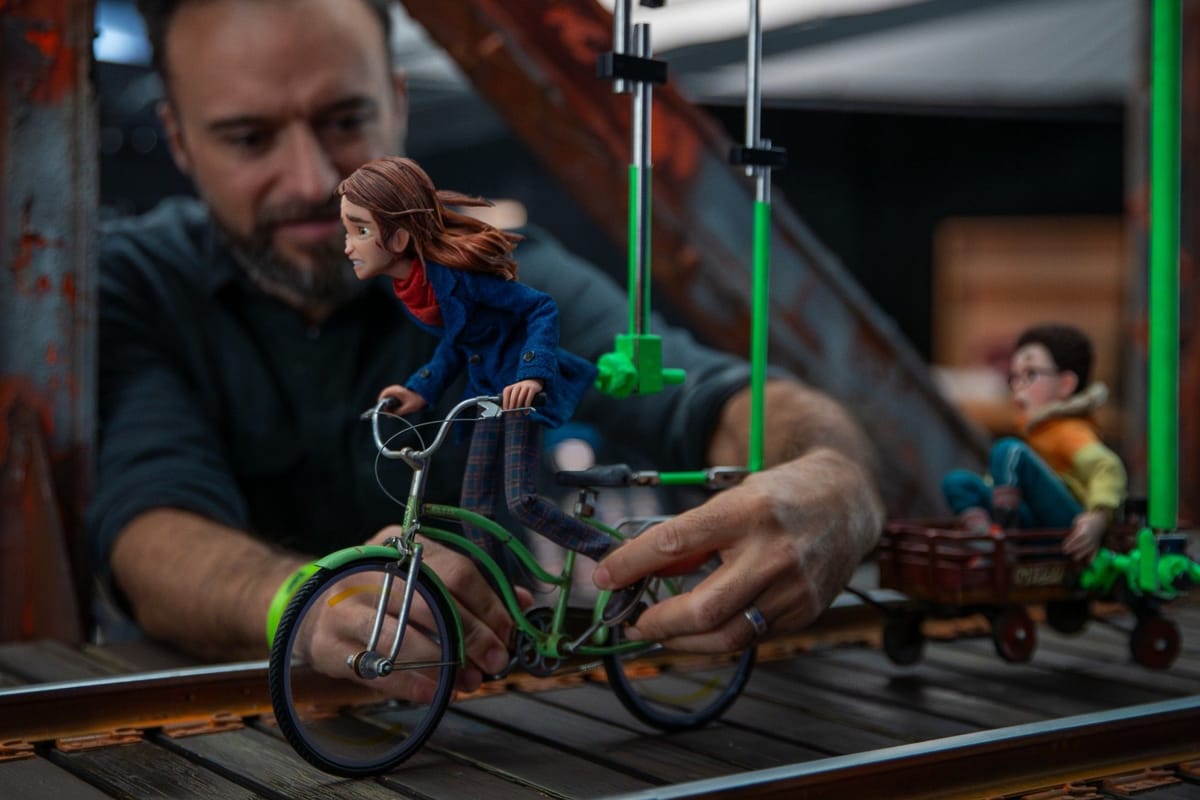
LAIKA uses replacement animation to give its puppets changing expressions. Rather than reshaping a face during shooting, animators exchange facial components for parts representing the next stage of a performance. Small changes around a mouth or eyebrow become movement when the photographed frames play in sequence.
For some Wildwood shots, that meant producing a separate face for every frame: 24 faces for one second of footage, according to Dork’s reporting on the production. The same report put the previous Guinness World Record, established by LAIKA’s Missing Link, at 106,000 printed faces. Wildwood’s reported total exceeds that figure, although Dork described the record as forthcoming rather than confirmed.
The reason for so many parts was tied to the performances. During a studio visit reported by Dork, LAIKA’s rapid prototyping director Brian McLean explained that directors wanted expressions specific to a character’s emotional journey, rather than reusing a smile from an earlier scene.
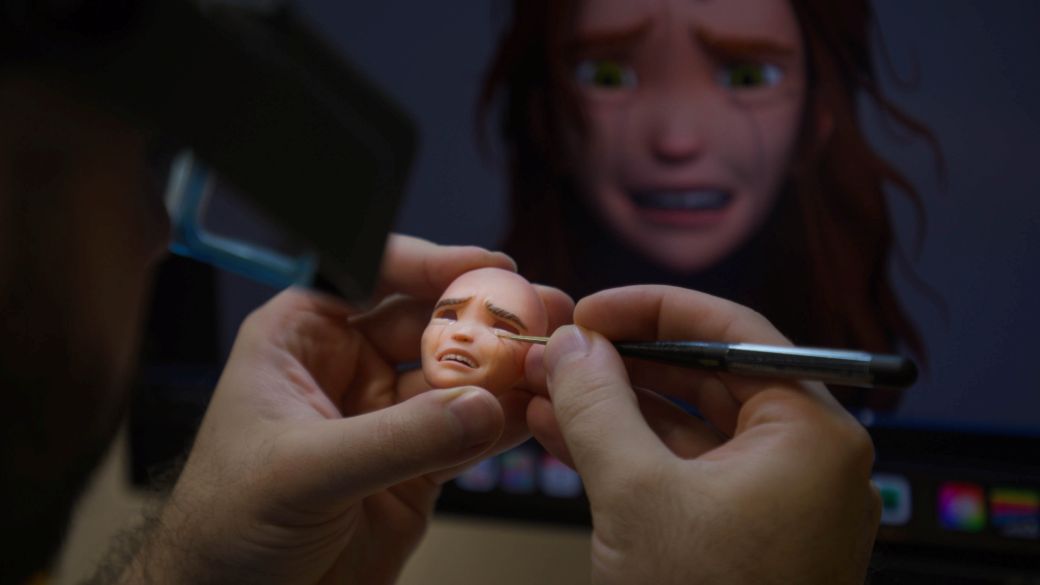
That makes the printing task unusually exacting. Each part may carry a different expression, but a slight unintended shift in color or surface texture between successive faces can become visible as flicker on screen.
Cuttlefish keeps color and geometry working together
Cuttlefish processes LAIKA’s digital models, including their color and texture information, into print-ready data for the J750 and J850 systems. Its role extends beyond reproducing the shape of an expression: the workflow also has to preserve fine details and consistent color across thousands of small components.
Fraunhofer IGD adapted the software for Wildwood’s production requirements, using methods for texture sharpening, surface optimization and color processing. The resulting faces combine the geometry needed for a particular performance with the skin tones and details that identify the character from frame to frame.
The partnership began about a decade ago after LAIKA encountered a scientific paper on color 3D printing. Initial tests led to a long-term collaboration, and Cuttlefish was subsequently used on Missing Link, which received a Best Animated Feature Film Oscar nomination in 2020.
Printed heads still have to work with handmade puppets
The printer is only one part of the production chain. In a roundtable interview with The Nerds of Color, McLean described the constant coordination between his department, which builds heads, and the team responsible for puppet bodies. Opening a jaw can interfere with a collar or hair, making facial animation a shared engineering and fabrication problem.
Wildwood’s development stretched back to around 2010, with production beginning in 2021. Visual effects supervisor Steve Emerson said at the 2026 VIEW Conference that animation and visual effects work spanned more than five years.
For Fraunhofer IGD, those filmmaking demands also have relevance beyond animation. Cuttlefish is used in medical technology and industrial manufacturing, where control over printed appearance has other applications.
“A studio like LAIKA sets some of the most demanding requirements in full-color 3D printing. Technologies that prove themselves in this environment can create value across many other industries.”
Philipp Urban, Head of 3D Printing R&D at Fraunhofer IGD