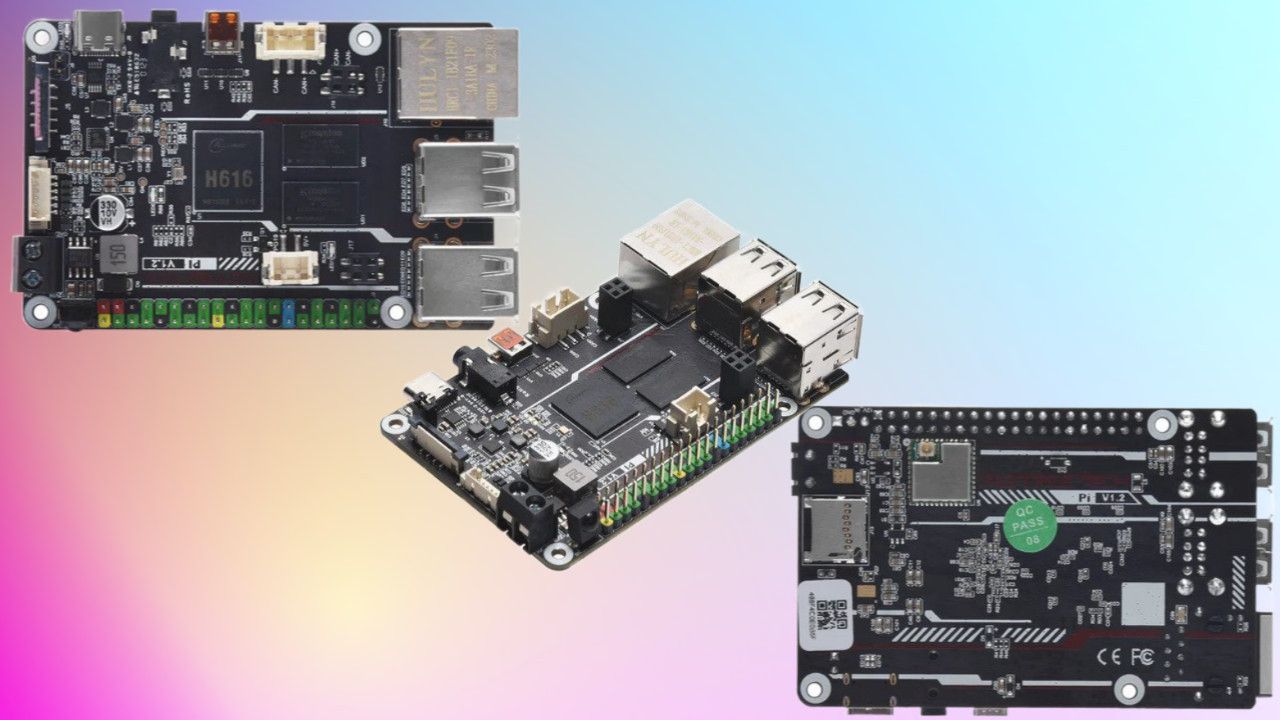
BigTreeTech’s BTT Pi v1.2 put a printer-focused spin on the Raspberry Pi alternative in May 2023. Priced at around $33 at the time, the single-board computer combined Klipper support, a dedicated accelerometer connection and power inputs suited to integration with a 3D printer.
Tom’s Hardware reported on the board as Raspberry Pi supplies were recovering from shortages. Its appeal went beyond filling that supply gap: BigTreeTech had built in connections aimed specifically at owners looking to add Klipper and resonance compensation to an existing machine.
A Klipper host with an accelerometer connection
The BTT Pi v1.2 supported Klipper, the alternative printer firmware that uses additional computing resources alongside a printer’s mainboard. Owners still needed that mainboard, with the BTT Pi serving as an addition to the printer’s electronics.
The dedicated ADXL345 accelerometer port was a particularly relevant feature. Connecting an accelerometer gave users a route to measuring printer resonance for Klipper’s input shaping, a technique intended to reduce ringing or ghosting on printed surfaces.
Those artifacts become a concern when fast motion and the inertia of a heavy print head excite vibration in the machine. Input shaping attempts to compensate for that resonance, helping address the surface defects associated with it.
The calibration process also involved software configuration. Siboor’s later resonance measurement guide, published in October 2024, described checking accelerometer connections and sensor noise, testing both motion axes, and using the results to select shaper settings. Its automatic calibration instructions also called for users to update maximum acceleration manually based on the recommendations.
Quad-core hardware in an 85 x 56 mm board
At the heart of the BTT Pi v1.2 was an Allwinner H616 system-on-chip with four 64-bit Arm Cortex-A53 cores running at 1.5 GHz. It paired that processor with 1GB of DDR3L memory and microSD storage.
Tom’s Hardware positioned it alongside the Raspberry Pi 3 Model B. The BTT board’s CPU clock was 300 MHz higher, while the Raspberry Pi Zero 2 W used Cortex-A53 cores at 1 GHz and carried half as much RAM.
The board’s listed hardware included:
- Arm Mali G31 MP2 graphics with OpenGL ES 3.2 support.
- Ethernet and 2.4 GHz 802.11 b/g/n Wi-Fi.
- Four USB 2 ports and a USB-to-CAN module port.
- Micro HDMI, a 3.5 mm audio jack and an infrared receiver.
- A color-coded 40-pin GPIO header.
All of that fitted onto an 85 x 56 mm board, giving the printer-oriented connections a compact footprint.
Raspberry Pi accessories needed a compatibility check
The familiar 40-pin header did not make accessory selection straightforward. Tom’s Hardware observed that the GPIO layout appeared rotated 180 degrees, along with the rest of the board, and warned that this arrangement would make most Raspberry Pi cases incompatible.
At the time of its report, the publication had also been unable to find a GPIO programming guide in BigTreeTech’s support section. Raspberry Pi HAT compatibility remained unclear because it depended on both the pinout and software support.
Two power options for printer integration
The BTT Pi v1.2 accepted 5V at 2A through USB-C, or 12 to 24V through screw terminals. That second input gave builders a power connection option beyond USB-C when incorporating the board into a printer setup.
BigTreeTech also offered cloud printing through the Cloud 3D Print app, extending the board’s intended role from running Klipper to providing another way to send print jobs.