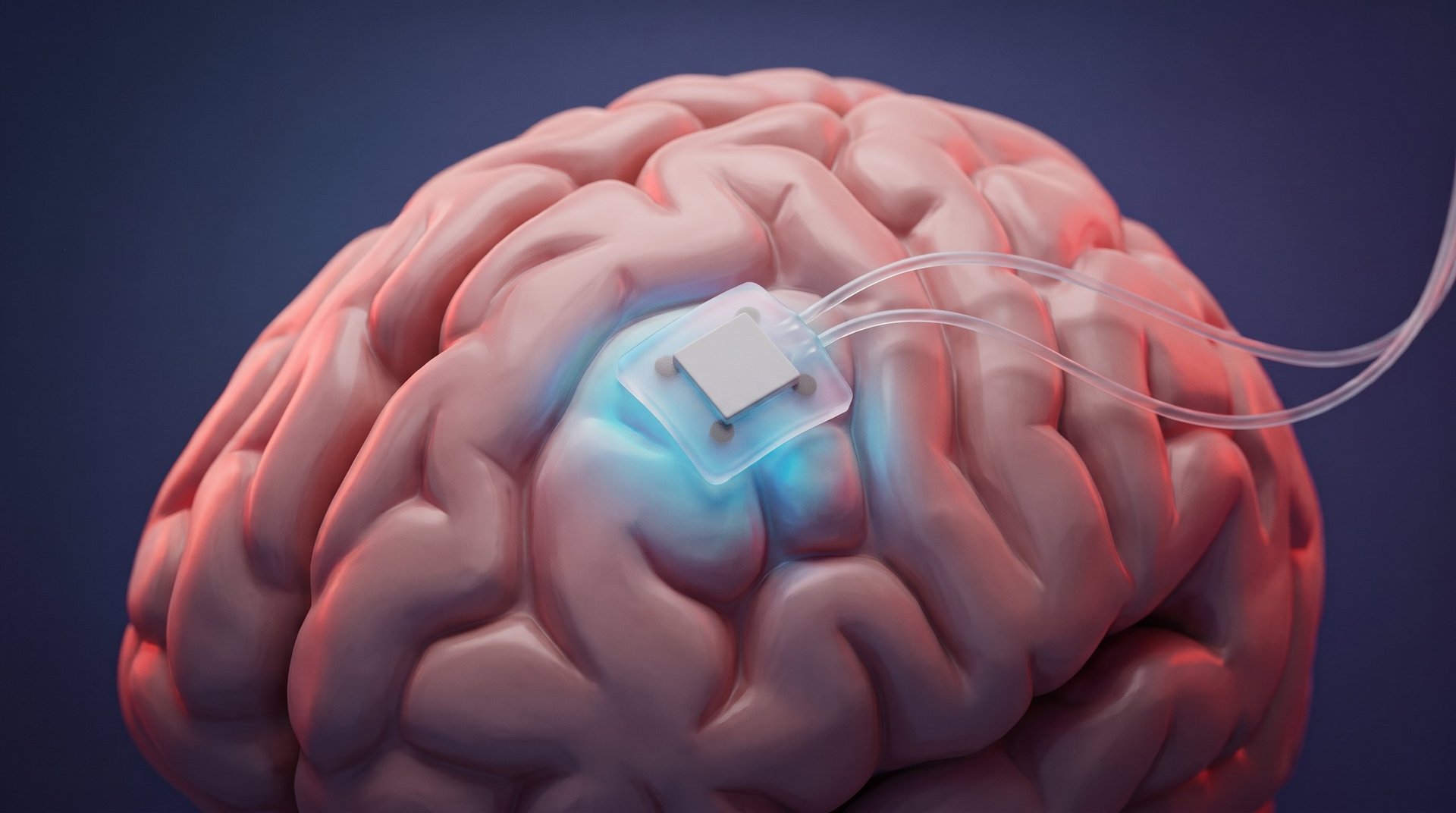
A 3D printed silicone implant has suppressed seizure-like activity in rats by cooling a small patch of the brain while recording its electrical signals. The prototype brings temperature control, heat removal and sensing into a soft package measuring just 10 x 10 x 3 mm.
Researchers from the Leibniz Institute for Polymer Research Dresden, TUD Dresden University of Technology, the University of Sheffield and the University of Limerick developed the device as a potential route toward treating drug-resistant focal epilepsy. Their study, published in Advanced Science, explores how extrusion-based printing can integrate several functions into an implant placed on the brain’s surface.
Three printed layers handle sensing, cooling and heat removal
Focal brain cooling temporarily lowers the temperature of a targeted region to quiet neural activity. One persistent engineering problem is where the extracted heat goes: cooling one surface creates heat elsewhere, and that heat must leave without warming surrounding tissue excessively.
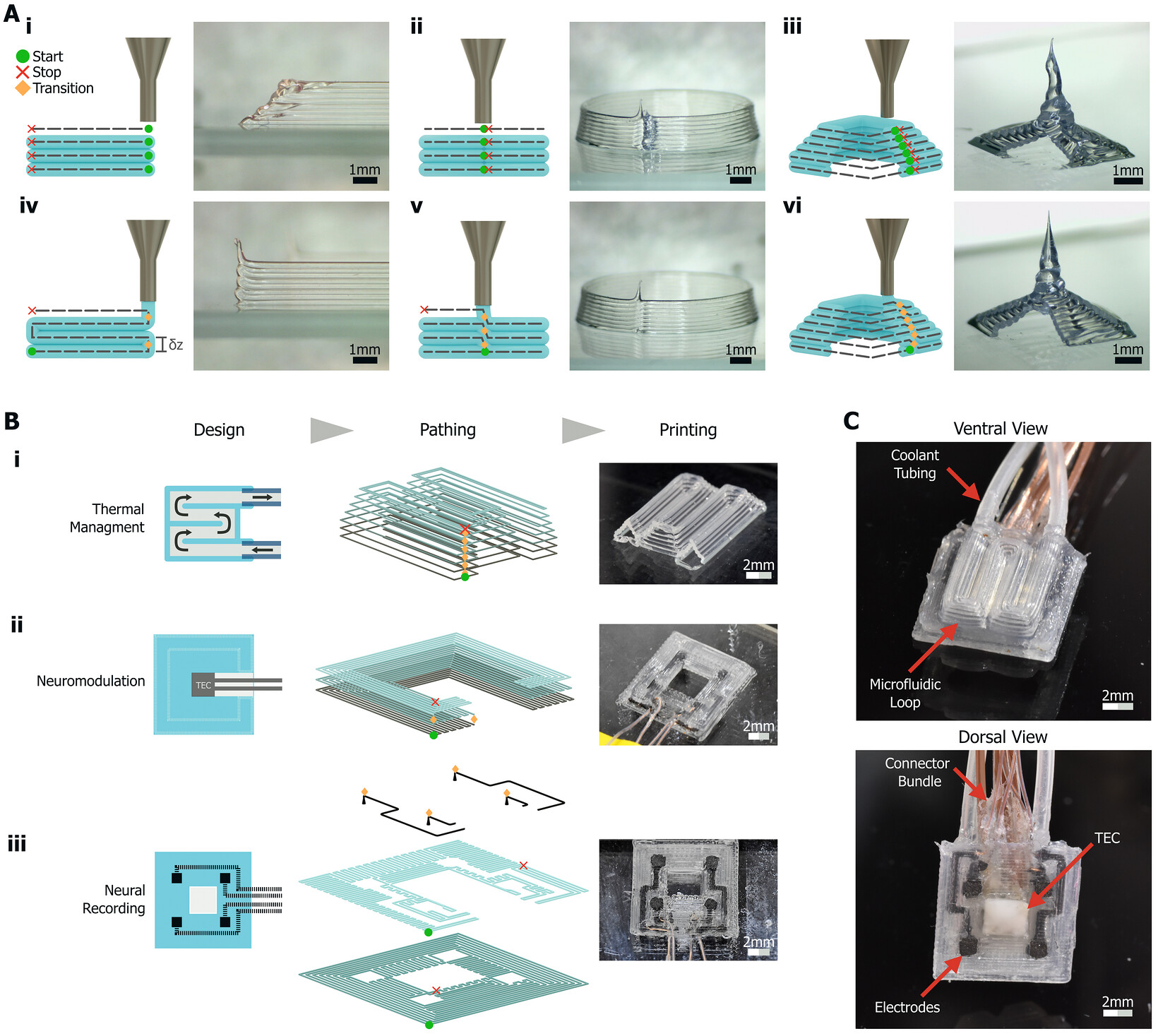
The team used direct ink writing to extrude Dow’s DOWSIL SE1700 silicone on a RegenHU 3D Discovery printer. Three stacked modules divide the work:
- A bottom layer carries four electrodes printed from a graphite and silicone composite.
- A middle layer houses a miniature thermoelectric cooler, which transfers heat between its faces when current flows.
- A top layer contains a water channel that removes heat from the cooler’s warm side.
Each silicone layer was printed along a continuous path to avoid potentially weak seams. A final curing step joined the modules into one piece. The researchers say using non-cleanroom tools and off-the-shelf components could lower the cost of developing multifunctional implants.
Water circulation keeps the warm side under control
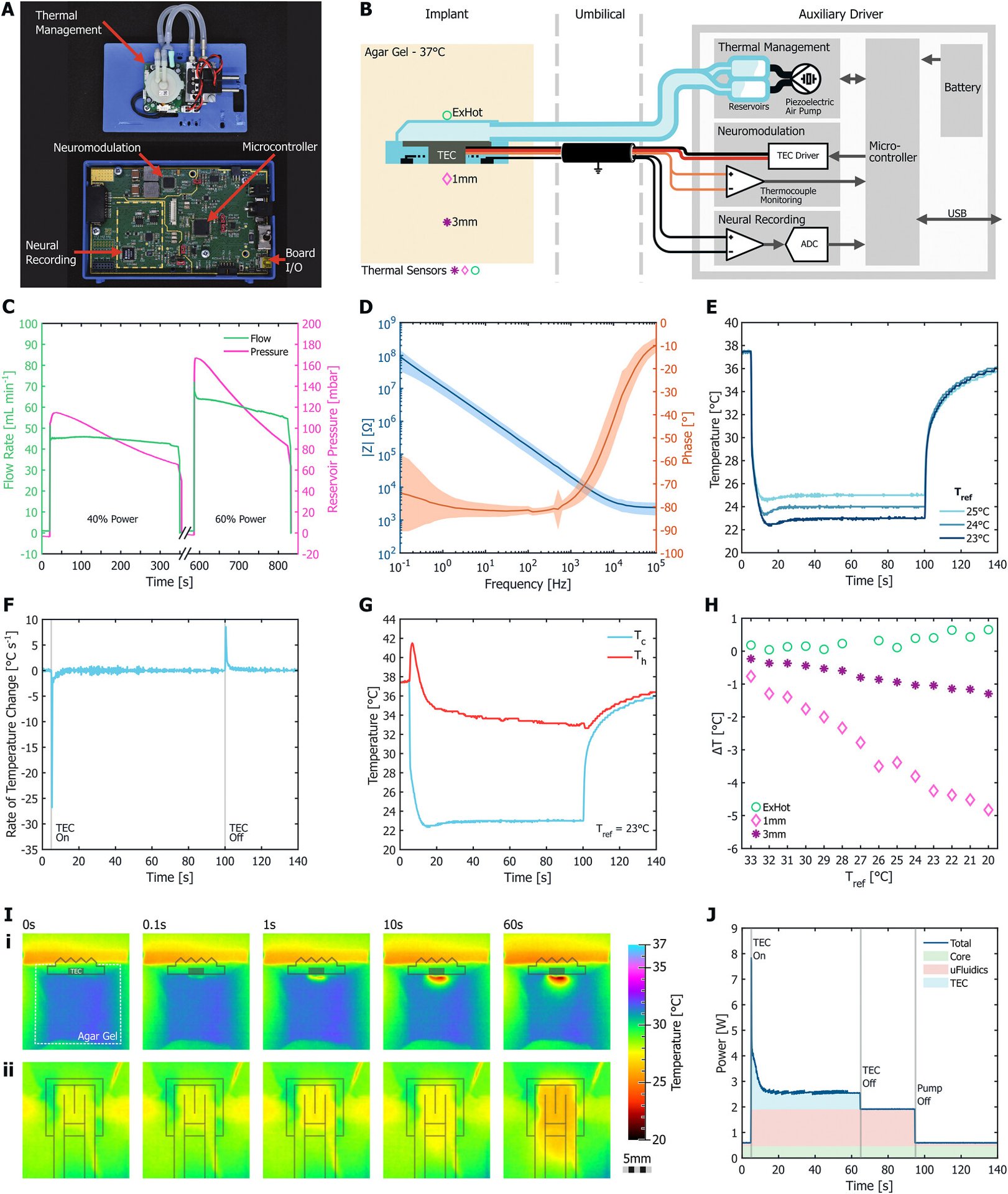
An external 17 x 8 x 5 cm driver powers the implant, circulates water and adjusts current according to temperature readings. The team’s modeling indicated that natural cerebrospinal fluid flow could not keep warming around the device within the intended 1°C limit, prompting the use of forced water circulation.
In agar gel maintained at 37°C, the system reached 23°C in about five seconds and held its target within ±0.25°C. Cooling extended 1 to 3 mm beneath the device, while heat from the warm side remained inside the implant. Steady cooling consumed 2.6 W.
Those depth measurements carry an important limitation: agar lacks blood flow, so the authors caution that the gel tests likely overestimate how far cooling would spread in living tissue.
Rat experiments show rapid but temporary suppression
The researchers tested the implant in nine anesthetized rats, inducing seizure-like activity with 4-aminopyridine. A NeuroNexus depth probe delivered the drug and recorded activity inside the cortex. Cooling was applied for 60 seconds at temperatures between 25°C and 15°C.
Average brain signal energy declined at every temperature tested, with changes appearing within seconds. The printed electrodes registered the most consistent reductions in the delta and beta frequency bands. At 18°C, delta-band signal energy fell by an average of 48%, with variability of ±35%.
The coldest setting, 15°C, was slightly less effective than milder temperatures. The researchers say that result needs further investigation because it differs from earlier studies and is based on few trials.
Activity returned tens of seconds after cooling ended. The experiments therefore demonstrated temporary suppression rather than seizure termination.
Smaller control hardware is the next major engineering task
The measured cooling depth is comparable to the thickness of the human neocortex, making surface-originating seizures a potential application, according to the authors. Deeper or scattered seizure sources could require additional cooling contacts or a different implant shape.
Long-term implantation also demands substantial changes outside the soft implant itself. The 680 cm³ driver would need to shrink toward the 10 to 20 cm³ scale of chest-implanted pacemakers. Reliable connectors, an integrated power supply, sealed titanium housing and aging tests remain necessary.
The team identifies wireless power transfer as one possible route. It also proposes eventually using the implant’s recorded signals to trigger cooling automatically, drawing on adaptive deep brain stimulation approaches that adjust treatment using measured brain activity.