Turning Glass Waste into High-Value 3D Printed Products
A startup named Vitriform3D, in partnership with Oak Ridge National Laboratory’s (ORNL) Manufacturing Demonstration Facility (MDF), has pioneered a novel 3D printing process that transforms post-consumer glass into durable, high-value products. This innovative approach addresses the environmental challenge of glass waste, much of which currently ends up in landfills despite glass being infinitely recyclable.

How Binder Jetting Works with Crushed Glass
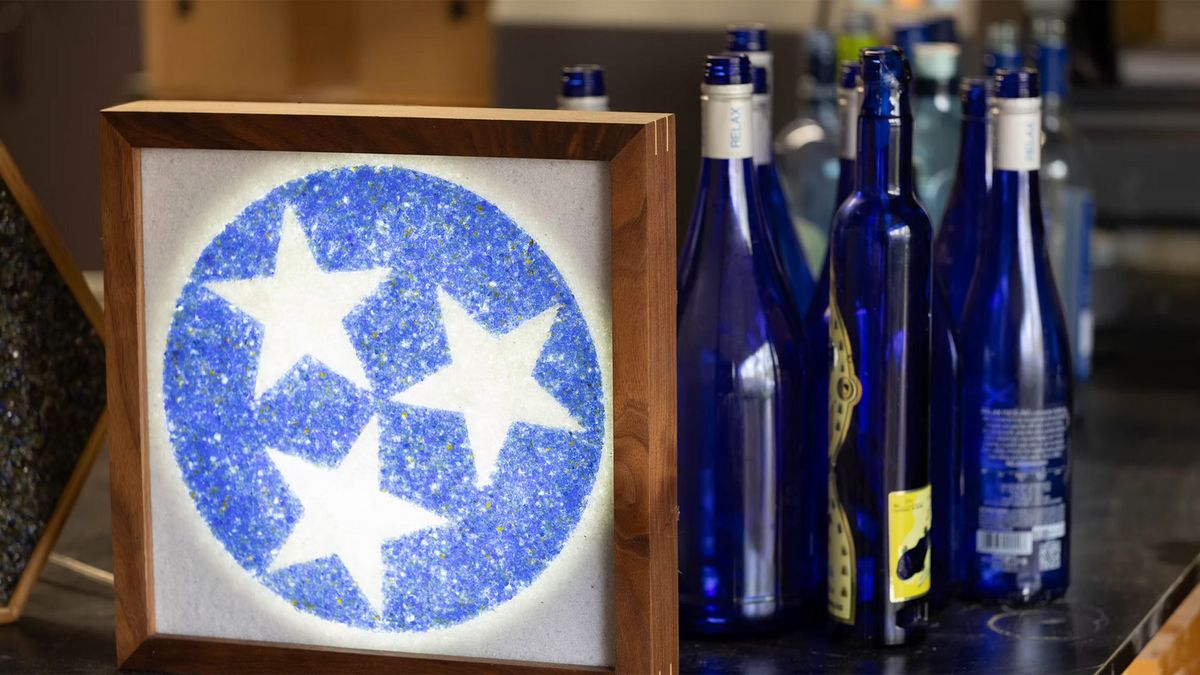
The core of Vitriform3D’s technology is a patent-pending binder jetting process. This technique involves spreading thin layers of powdered material – in this case, crushed glass bottles – and selectively applying a binder adhesive with an inkjet-style print head to glue the particles together. Layer by layer, the 3D printer builds up complex objects.
Ryan Dehoff from ORNL’s MDF explains the process:
"You take a thin layer of material, most times it’s powder. It can be metal powder, it can be ceramic powder. We lay that powder out in a very thin sheet. And then we essentially take an ink jet [printer] head, and we put some sort of binder agent where we want to print or glue that material together."
The chemical formulation of the binder agent has been a critical focus to ensure the final products have both strength and aesthetic appeal. After printing, the objects are heated in an oven to set their final shape and durability.
From Bottles to Building Materials
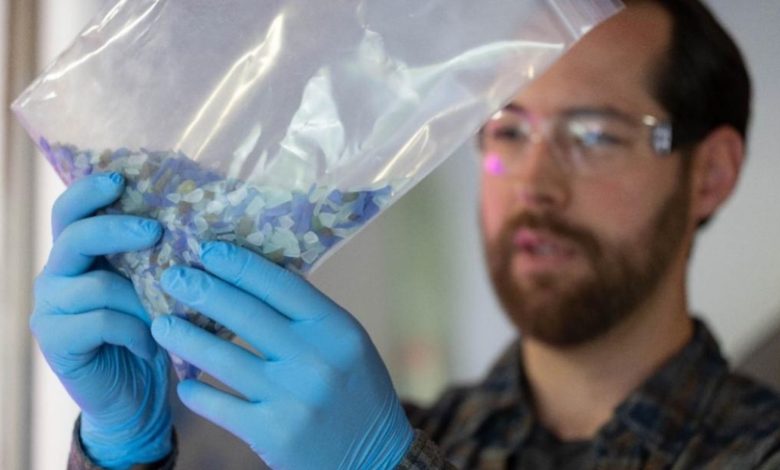
Vitriform3D’s process starts by collecting glass bottles from residents and businesses, primarily in Knoxville, Tennessee. Unlike traditional glass recycling, which requires strict sorting by color and grade and consumes significant energy to melt and reform glass, Vitriform3D mainly requires crushed bottles. Some color separation is done to create more vibrant inks for printing.
The crushed glass powder is combined with 5 to 10 percent polymer binder, resulting in engineered stone products that contain 90 to 95 percent recycled glass. These products include kitchen countertops, floor tiles, architectural wall accents, and potentially exterior cladding for buildings.
Nolan Hayes, a building technologies researcher at ORNL, highlights the advantages of glass for construction:
"Glass is extremely resilient, durable, and versatile. It’s fire-resistant and can withstand extreme weather conditions."
Scaling and Educational Impact
The binder jetting method is versatile and not limited to glass; it can work with almost any powdered material. Vitriform3D’s approach shows promise for scaling up to industrial production of recycled glass cladding panels for buildings.
Additionally, Vitriform3D is installing a 3D printer at Lawrence Technological University in Detroit to enable architecture students to experiment with recycled glass printing on a smaller scale. This micro-factory concept empowers smaller projects and creative applications beyond large industrial uses.
Addressing Glass Waste and Material Challenges
Alex Stiles, co-founder of Vitriform3D, points out that only about one-third of glass waste in the U.S. is recycled, with much glass still going to landfills. The startup’s glass collection company, Fourth & Glass, has gathered tens of thousands of pounds of glass that would otherwise be discarded.
Traditional glass recycling faces challenges such as the need for high-quality sand and contamination risks that can halt production lines. Vitriform3D’s process circumvents some of these issues by using crushed glass powder directly and focusing on additive manufacturing techniques.
A Vision for Sustainable Construction
The collaboration between Vitriform3D and ORNL exemplifies how advanced manufacturing and sustainability can intersect. By turning waste glass into functional, beautiful building materials through 3D printing, they offer a glimpse into a more circular economy for construction materials.
The binder jetting process could potentially be adapted for desktop or hobbyist 3D printers in the future, broadening access to recycled glass fabrication.
For those interested in seeing the process in action, a detailed video demonstration is available showcasing how yesterday’s glass bottles can become tomorrow’s building materials.
This innovative approach not only reduces landfill waste but also taps into the abundant physical properties and colors of glass to create products that truly "sparkle" with sustainability.
Explore more about Vitriform3D and their technology and watch the video demonstration to see this exciting development in 3D printing and recycled materials.