Introduction
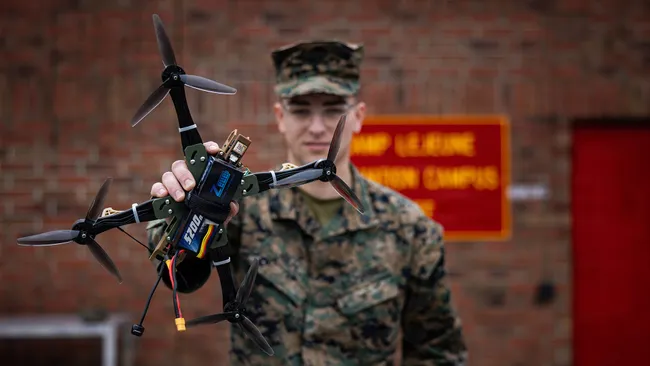
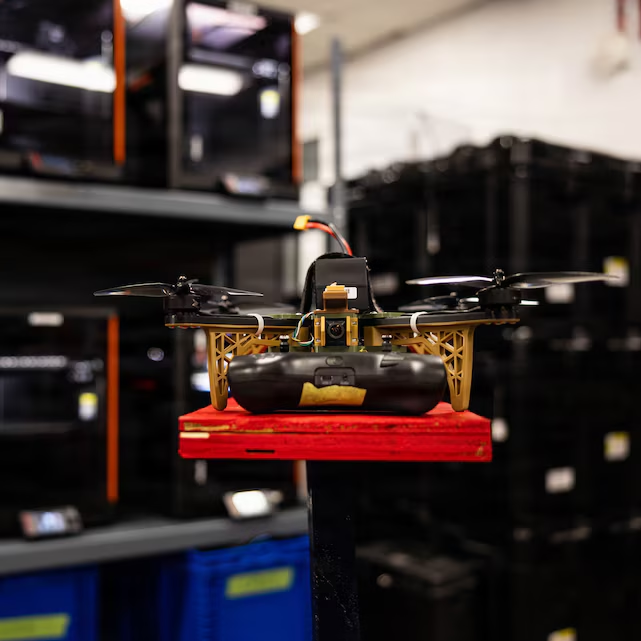
The U.S. Marine Corps' 2nd Maintenance Battalion has successfully developed the first NDAA-compliant drone, dubbed HANX. Designed to avoid the use of components sourced from countries like China, the drone aims to reduce security risks such as backdoors in its systems. HANX represents a significant technological advancement by incorporating 3D printing into its production, enabling rapid manufacturing and in-field repairs without reliance on traditional contractor-driven processes.
HANX Drone Design and Capabilities
HANX is a modular, highly adaptable drone that can quickly switch roles from reconnaissance to one-way attack missions and other operational duties. Its modular design facilitates customization depending on mission needs, making it a versatile tool for the Marine Corps.
The integration of 3D printed parts allows for speedy production and maintenance by the Marines themselves, easing dependency on lengthy external procurement cycles.
Development and Key Contributors
A pivotal figure in HANX's development is U.S. Marine Corps Sgt. Henry David Volpe. Volpe's background as a 3D printing and LEGO robotics enthusiast, combined with his automotive maintenance studies and recent military training, equipped him with the skills and vision to drive this project forward.
Volpe identified the opportunity to create a cost-effective drone that retained essential features while being manufactured entirely in-house, cutting out the need for multiple contracting layers. His role in the II Marine Expeditionary Force Innovation Campus, which specializes in robotics, 3D printing, and advanced manufacturing, was crucial to the drone's development.
Challenges and Future Considerations
Despite HANX's promise, some challenges remain before its widespread deployment:
- Infrastructure Dependency: Production of HANX currently requires specialized infrastructure and equipment only available at the II Marine Expeditionary Force Innovation Campus, limiting the ability to manufacture or repair parts directly in the field.
- Training Requirements: The drone’s modularity and adaptability mean that operators will need specialized training to assemble, maintain, and calibrate the drone effectively, ensuring operational success.
Conclusion
The HANX drone marks a major step forward for the U.S. Marine Corps in embracing advanced manufacturing techniques to produce secure, adaptable, and rapidly deployable unmanned systems. While hurdles remain, particularly surrounding specialized infrastructure and training, HANX offers a glimpse into the future of military drone technology driven by innovation from within the service.