A syringe-fed 3D printer gave Virginia Tech researchers a way to control how heat moved through soft silicone: stretch the liquid metal droplets inside it as the material passed through the nozzle. The resulting composite reached 9.9 W/mK along the elongated droplets, roughly 40 times the thermal conductivity of unfilled silicone.
The research featured in Tom’s Hardware’s September 2026 report, which covered a demonstration by graduate student Hugh Grennan on the 3D Printing Nerd YouTube channel. The demonstration brought together two capabilities of the material: directing heat through printed structures and forming electrical tracks that could regain conductivity after being cut.
The nozzle controlled the metal droplets’ shape
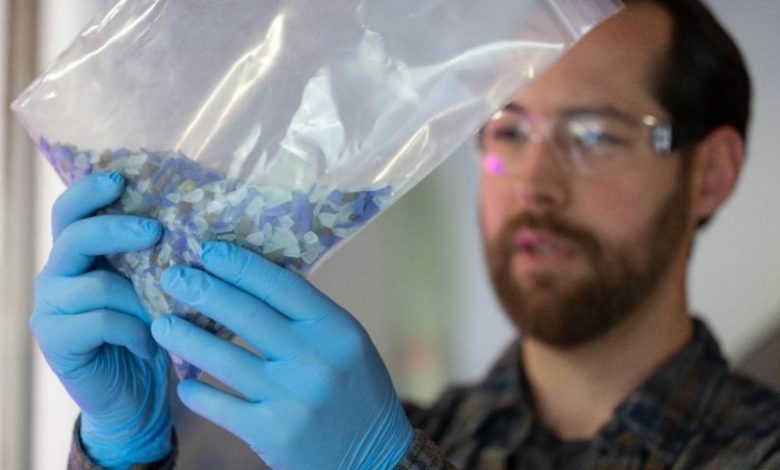
In the 3D Printing Nerd video, hosted by Joel Telling, Grennan mixed eutectic gallium-indium, or EGaIn, into uncured polydimethylsiloxane silicone, known as PDMS. He described the alloy as approximately three parts gallium to one part indium, liquid at room temperature.
Mixing broke the metal into droplets roughly 10 to 100 microns across, each surrounded by a thin gallium oxide skin. About an hour in an oven solidified the silicone while leaving the enclosed metal liquid.
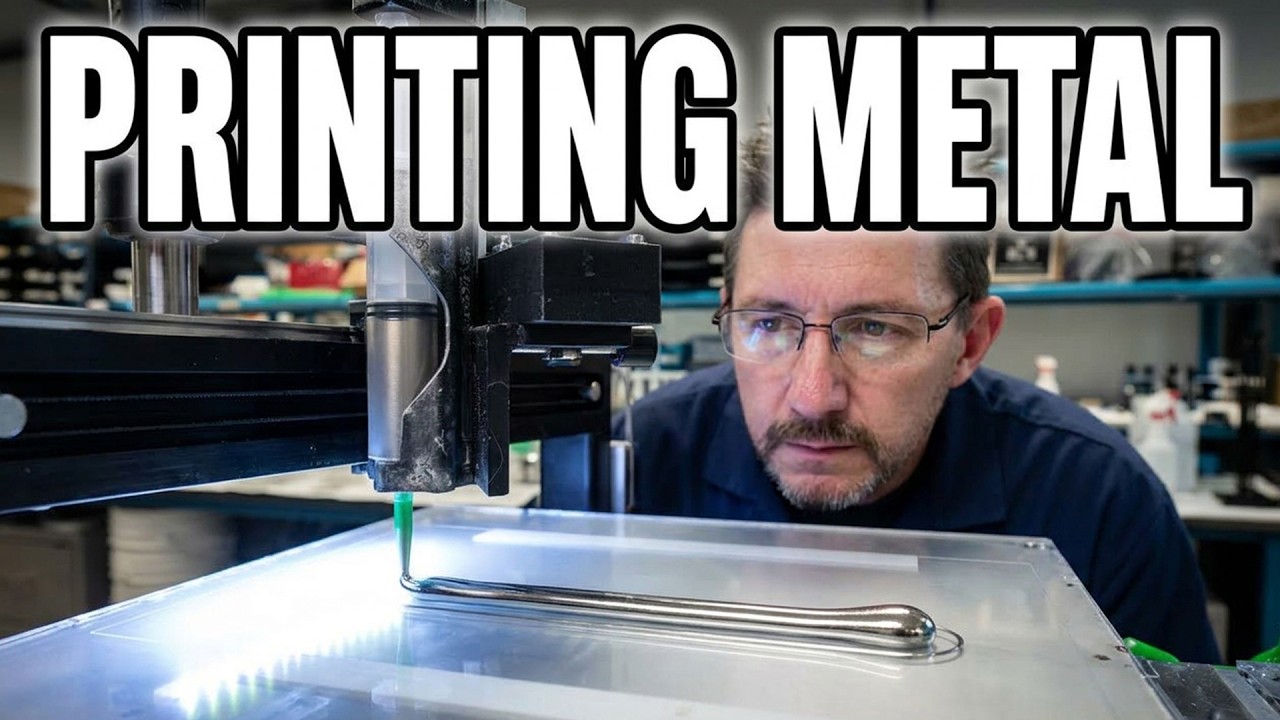
The demonstration took place at VT MADE, Virginia Tech’s advanced manufacturing center, which includes the Soft Materials and Structures Lab where Grennan works. Its syringe-fed printer allowed the team to load and extrude the composite directly.
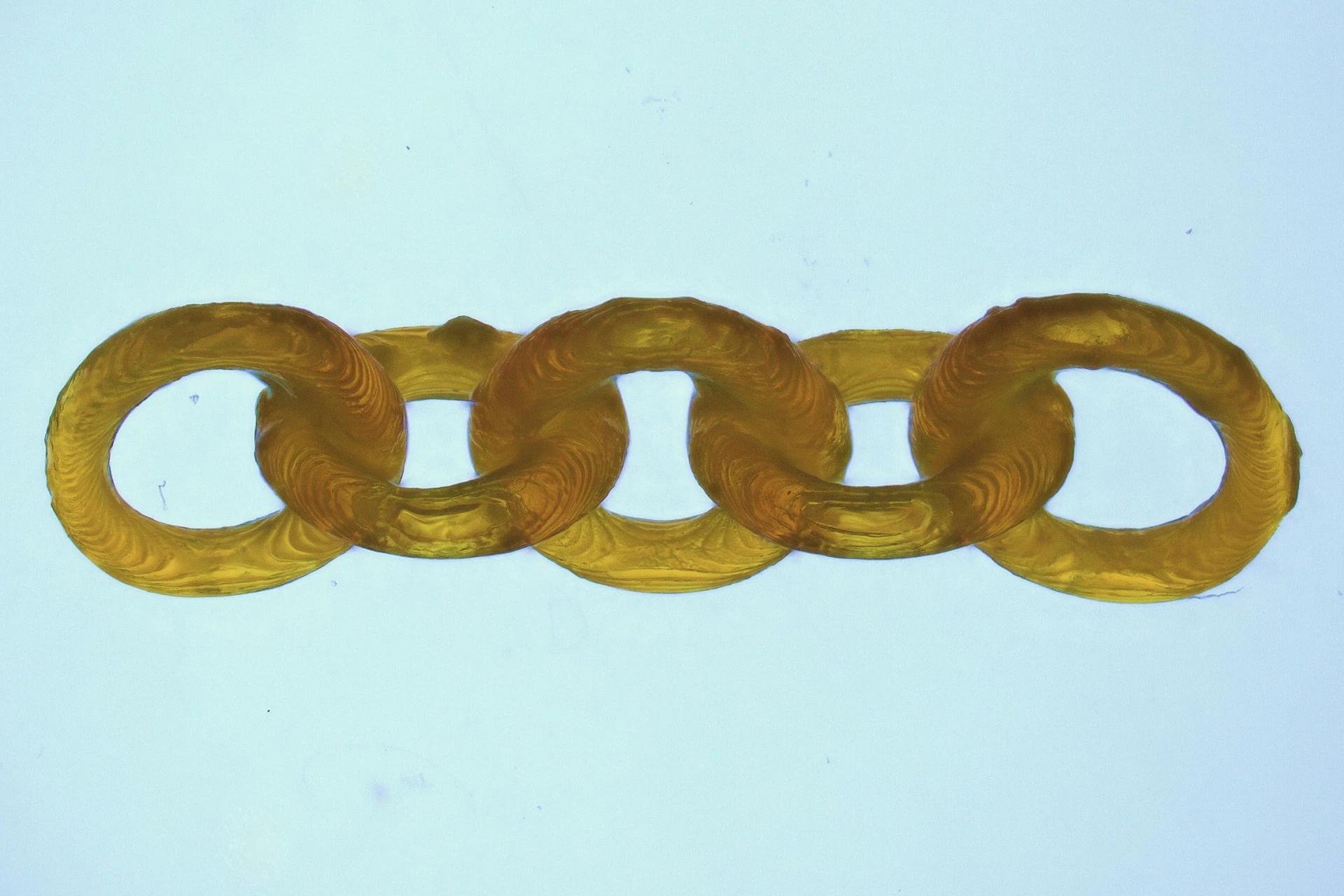
The important adjustment was the ratio between the material’s exit speed and the print bed’s movement. With the appropriate setting, initially round droplets stretched into long, thin shapes. Heat could then travel along their long axes, allowing the printed microstructure to guide heat from a source toward a heat sink.
A 40-fold gain along the printed direction
The thermal-conductivity paper, titled “Anisotropic and Heterogeneous Thermal Conductivity in Programmed Liquid Metal Composites Through Direct Ink Writing,” reported 9.9 W/mK in the direction of droplet elongation, compared with 0.24 W/mK for the unfilled elastomer.
Direct ink writing also allowed droplet orientation and aspect ratio to vary at different locations within a continuous film. That gave the researchers spatial control over heat transfer as well as directional control, while retaining a compliant material.
There is a discrepancy in the publication year: Tom’s Hardware identified the Advanced Functional Materials paper as a 2025 publication, while the lab’s publication list dated it to 2024. A separate 2024 paper in Additive Manufacturing identified the oxide skin as critical to reshaping the droplets and retaining their shape.
Grennan pointed to custom heat sinks and stretchable wearable devices as possible uses. The thermal study also identified heat management in electric vehicles, electronics and robotics as applications for the approach.
Pressure turned isolated droplets into an electrical track
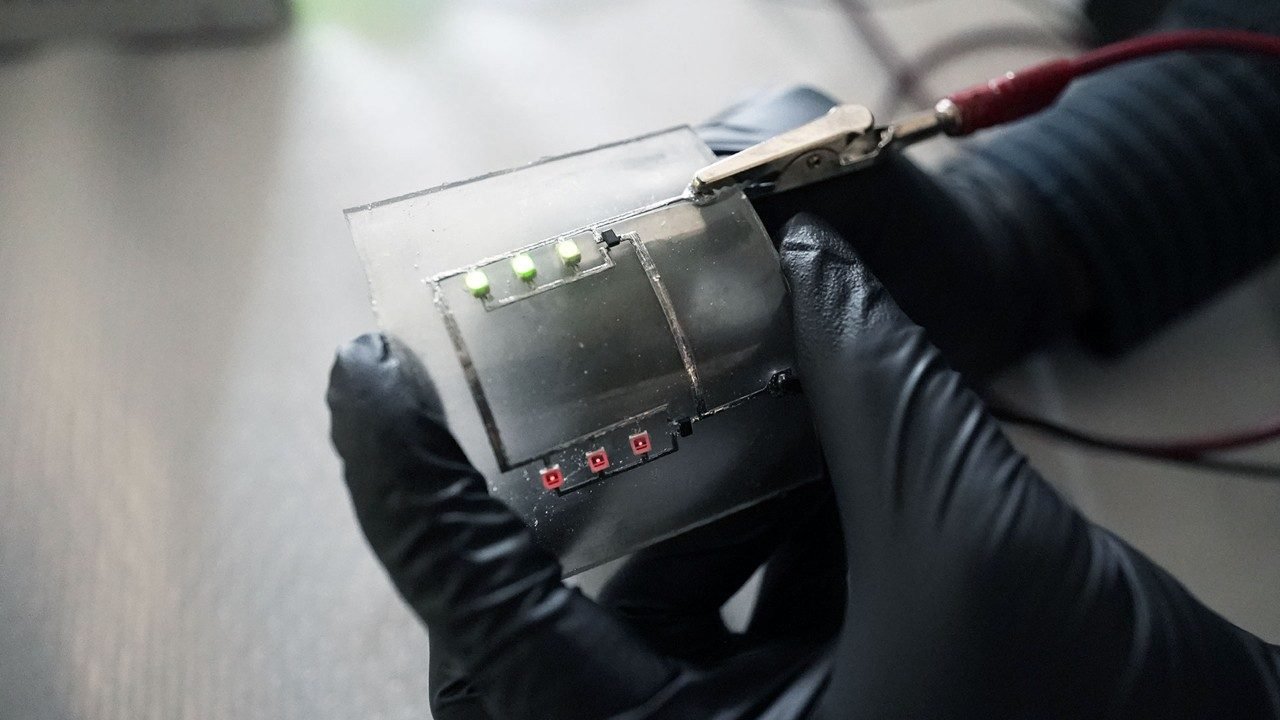
The electrical demonstration used a cast slab of the composite. Grennan pressed a line into it with an indenter, forcing droplets together into a continuous conductive pathway that lit an LED. Under a microscope, the track appeared as a solid line, with metal squeezed to the surface.
He then sliced across the track with a razor blade and pressed near the cut. The LED lit again, faintly.
Initially, the silicone and oxide skins separated the droplets electrically. Pressure brought the liquid metal together, creating pathways that could reform around damage. In the demonstrated repair, pressure was applied again near the cut.
The lab’s publication list showed further work on these materials in 2026, including self-healing liquid metal-elastomer circuits for underwater electronics and cold extrusion of stretchable liquid metal-polymer feedstock for intrinsically conductive printing. The latter addressed parts that conduct as printed, extending the research beyond tracks activated by pressure.