GKN Aerospace has become the first company worldwide to earn Nadcap accreditation for Laser Wire Directed Energy Deposition (L-DED-w), adding independent validation to a manufacturing process already producing certified parts in flight.
The aerospace and defence supplier expects the accreditation to help bring more L-DED-w applications into full production. For customers evaluating the technology, it provides an industry-recognised assessment of the controls behind GKN’s manufacturing operations.
The milestone also comes relatively early in Nadcap’s formal oversight of directed energy deposition. Its dedicated DED audit criteria were published in June 2025, with the first audits beginning later that year.
Six areas of manufacturing control under review
Nadcap assesses aerospace special processes against requirements for quality, traceability and process control. GKN’s accreditation followed a comprehensive audit covering six areas:
- Process controls
- Operating procedures
- Personnel qualifications
- Equipment
- Material control
- Traceability
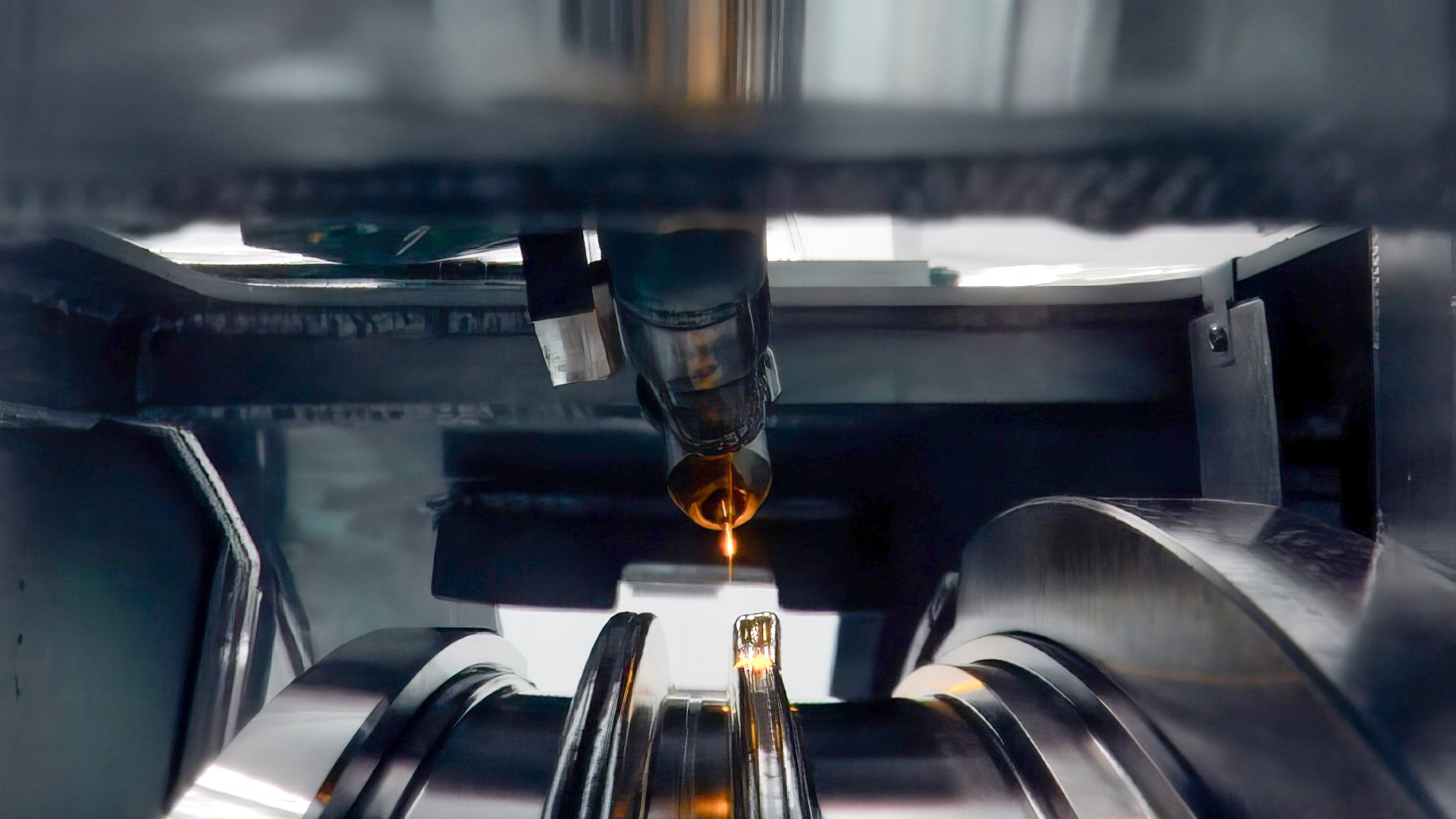
Those checks address the manufacturing system supporting laser wire deposition. In L-DED-w, a laser melts metal wire fed into a melt pool, building a component bead by bead. GKN says the approach can reduce material use while enabling complex aerospace components and giving engineers greater freedom in their design and manufacture.
The company has already designed, developed and delivered fully certified L-DED-w components that are flying today. Its next objective is broader industrial application across aerospace and defence, supported by independently audited processes.
Sébastien Aknouche, senior vice-president of Material Solutions at GKN Aerospace, described repeatability as central to customer expectations:
“For additive manufacturing, that means having robust and repeatable processes that can support the move into industrial production.”
Sébastien Aknouche, SVP Material Solutions, GKN Aerospace
Nearly a decade of laser wire development
GKN’s work to industrialise wire-fed laser deposition stretches back to a 2017 agreement with Oak Ridge National Laboratory. That effort has since grown to include multi-year Pratt & Whitney repair contracts, under which GKN’s Trollhättan operation uses DED on geared turbofan engine parts.
The accreditation adds another step to that progression from technology development into aerospace manufacturing. It gives customers independent verification of process control as GKN seeks to expand the range of applications reaching production.
Aknouche said Nadcap provides a “stronger foundation for broader application of L-DED-w across aerospace and defence.”
Nadcap extends its reach across additive manufacturing
The Performance Review Institute’s AC7131/2 criteria established an audit route for directed energy deposition, including laser wire, in June 2025. GKN is the first company accredited for the laser wire process under that framework.
Other additive manufacturing routes have a larger audit history. By mid-2026, Nadcap had completed more than 100 powder bed fusion audits across ten countries and regions. Several aerospace original equipment manufacturers already require Nadcap accreditation from their additive suppliers, making process qualification an increasingly important part of supplier selection.
The programme is also expanding into feedstock production. Tekna became the first company accredited for metallic powder manufacturing, after developing the criteria with BAE Systems, GKN Aerospace and Safran.
Further expansion is under evaluation: criteria for polymer laser sintering and fused filament fabrication were in test audits during 2026. Together with the newer DED framework, those efforts extend Nadcap’s coverage across a broader range of additive manufacturing processes and materials.