
Sound-Powered Engines Transform Micro Drone Propulsion
Researchers at Switzerland’s École Polytechnique Fédérale de Lausanne (EPFL) have developed an innovative propulsion system that uses sound waves to power micro drones and miniature boats. Unlike traditional motors or propellers, these devices harness the resonant frequencies of specially designed 3D-printed cavities to generate directional thrust from sound alone.
How Acoustic Resonators Generate Thrust
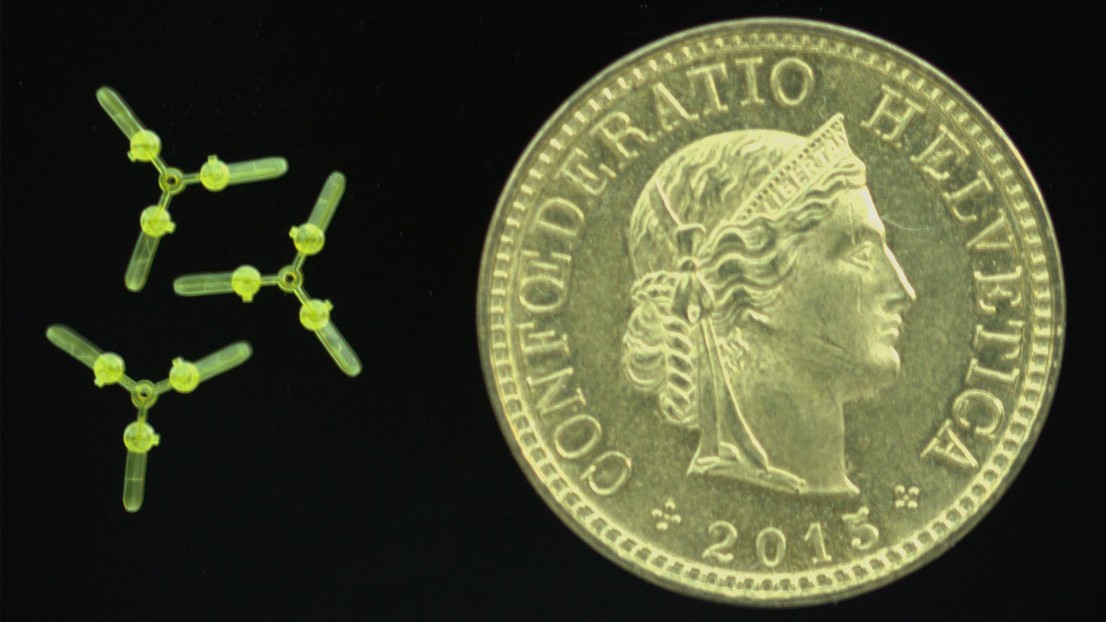
The core technology involves hollow, bell-shaped or spheroid cavities that resonate when exposed to sound waves at specific frequencies. These resonators cause the air molecules inside to oscillate intensely, pushing air out through a nozzle as a concentrated jet. This jet produces thrust capable of propelling small vehicles.
Selman Sakar, head of EPFL’s MicroBioRobotic Systems Laboratory (MICROBS), explains:
"Instead of pushing devices around with sound waves, we have created acoustic resonators that are tuned to harness sound at specific frequencies to generate directional thrust and controlled motion. Our work shows the feasibility of transforming a simple, cleverly designed mechanical piece into robot matter."
Practical Applications: Boats and Microfliers
The team has demonstrated three practical applications of this sound-powered engine:
– A miniature boat equipped with three resonators: one at the rear tuned to 540 Hz for propulsion, and two on the sides for navigation.
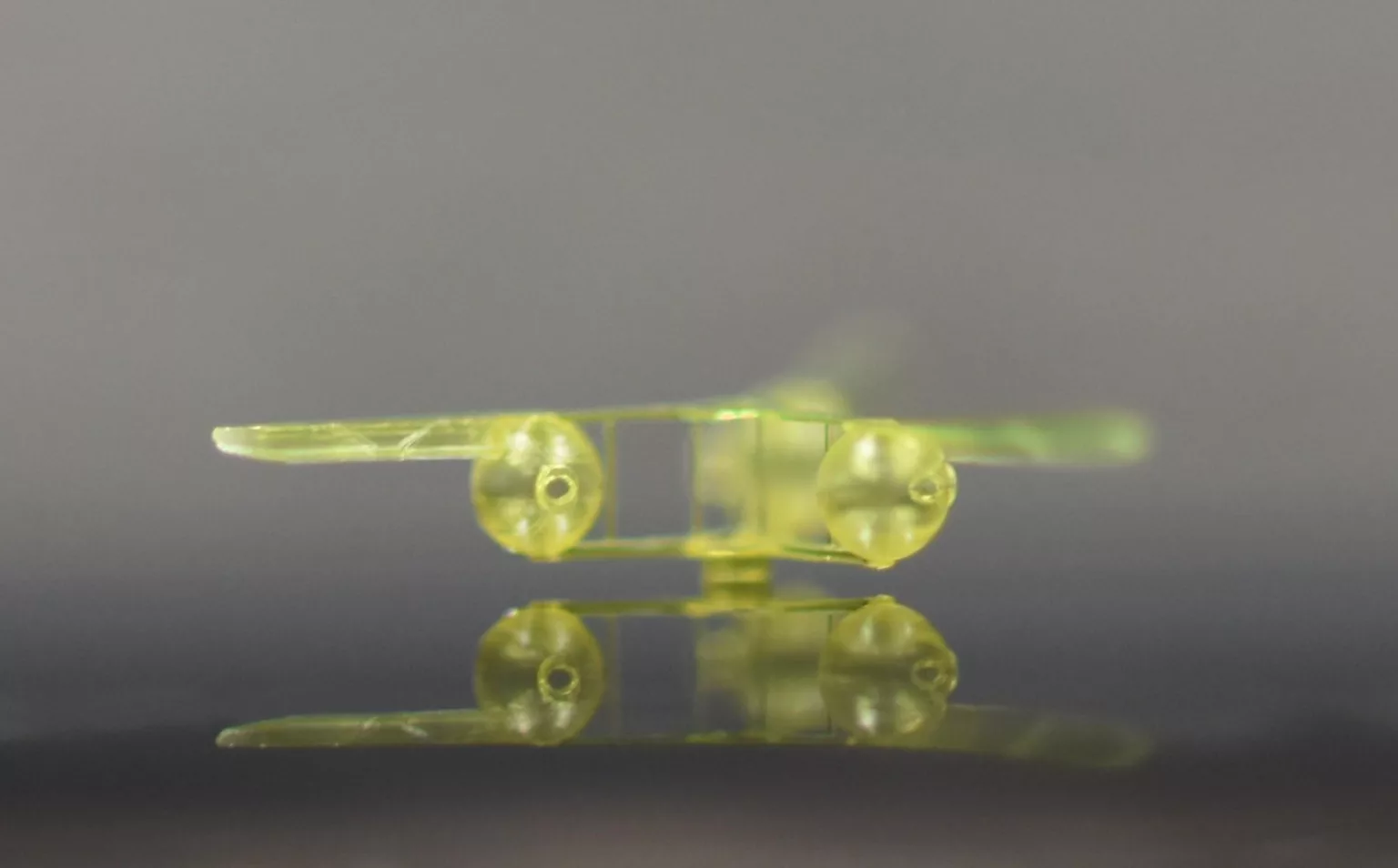
– Two types of microfliers powered by ultrasonic frequencies, which are inaudible to humans, enabling near-silent operation.
One microflier design features three downward-facing cavities that generate upward thrust like a rocket, allowing it to lift off the ground. Another design incorporates three blades connected at a central point like a helicopter rotor, with resonators at the base of each blade. When driven at the correct ultrasonic frequency, these resonators spin the blades at over 12,000 revolutions per minute, causing the device to hover silently.
Comparison to Other Acoustic Technologies
While similar in principle to xMEMS’ fan-on-a-chip cooling solution, which uses an ultrasonic piezoelectric membrane to move air, EPFL’s sound-powered engine relies on the shape of the cavity and its resonant frequency to create thrust. This approach avoids bulky moving parts, enabling extremely small and lightweight designs using 3D printing.
Current Limitations and Future Prospects
Currently, the microfliers can only achieve a maximum altitude of less than 5 millimeters, and the boat prototypes weigh almost nothing. Despite these limitations, the successful demonstration proves the concept’s viability.
The next challenge is scaling up the technology to carry payloads, potentially enabling propulsion for micro-drones similar in size to a mosquito. Such drones could have applications in surveillance or environmental monitoring, offering silent operation and minimal weight.
Vision for Adaptive, Sound-Responsive Robotics
Looking ahead, EPFL researchers envision flexible devices with multiple sound-responsive cavities tuned to different frequencies. This could allow parts of a robot to move, bend, or change shape in response to sound vibrations, opening new possibilities in robotics and aeronautics.
For more details on this breakthrough, see the EPFL/Science Advance publication and the original article.